How to Choose a Power Bank in 2026: Capacity, Speed & Safety
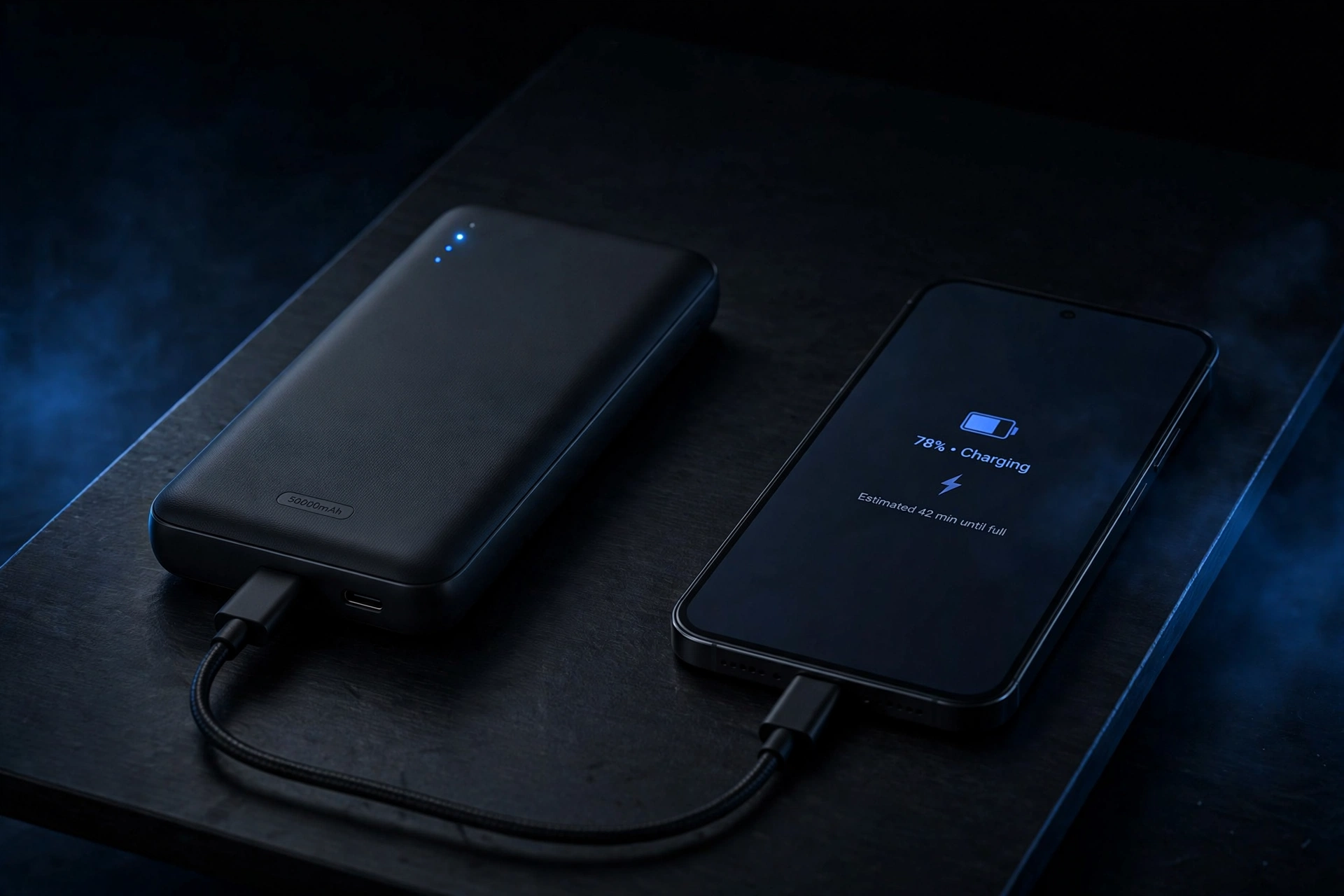
A power bank is one of those things you don't think about until your phone dies at 4% in an unfamiliar city. But walk into the market and you're hit with a wall of numbers: 10000mAh, 20000mAh, 22.5W, PD, QC. Here's how to cut through it.
Start with capacity: how much do you actually need?
Capacity is measured in milliamp-hours (mAh). A rough rule of thumb:
- 10000mAh — 2 full charges for most phones. Slim, pocket-friendly, great for daily carry.
- 20000mAh — 4–5 full charges. The sweet spot for travel and heavy users. Slightly heavier but still portable.
- 30000mAh+ — overkill for phones; useful if you're also charging tablets, cameras or sharing with a travel partner.
Bigger isn't always better. A 20000mAh bank you actually carry beats a 30000mAh brick that stays home.
Charging speed matters more than you think
Look for the output wattage (W). Standard 10W charging feels painfully slow on modern phones. For real fast charging:
- 18–22.5W — solid fast charging for most Android phones and iPhones
- 65W+ — enough for tablets and even some laptops
Also check the protocol: PD (Power Delivery) is the universal standard that works with iPhone, Samsung and Pixel. QC (Quick Charge) is mostly a Qualcomm/Android thing. A bank supporting PD covers nearly everyone.
Ports: count them before you buy
One USB-C port is the minimum in 2026. Two or more outputs let you charge your phone and earbuds at the same time — a small detail that matters enormously on travel days. Some banks can even charge themselves while charging your devices (pass-through charging).
Safety is not optional
A cheap no-name bank with poor circuitry is a fire risk. Stick to lithium-polymer cells from reputable designs and look for:
- Overcharge and over-discharge protection
- Short-circuit protection
- Temperature control
If a deal looks too good to be true on capacity, it probably is — inflated mAh ratings are the oldest trick in the book.
The short version
For most people: a 20000mAh bank with 22.5W+ PD fast charging, USB-C, from a brand that publishes real specs. That covers a long weekend trip, a heavy workday, and everything in between.
Looking for one? Our mini 20000mAh portable power bank hits exactly that spec — pocket-size, fast charging, and it ships free worldwide.
Power your everyday carry
Shop portable chargers & smart backpacks at VoltVault — free worldwide shipping.
Shop VoltVault